 Click on images for larger picture
| Past 'Bugs,bees & other
critters.
Click on Year (Or you can scroll down to the month you wish to see. Not all in date order) |
| August 2003 |
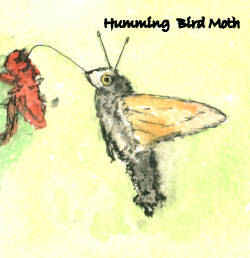
| The Hummingbird Hawk Moths ,
six on one Buddleia bush , currently visiting our gardens have
flown across from France. They lay eggs on the yellow Lady's
Bedstraw plant. They normally do not survive our winters ... so far. Another insect that hovers with a long tongue is the much smaller Bee Fly. Usually low down on small flowers. Their grubs eat those of the Bumble Bee . |
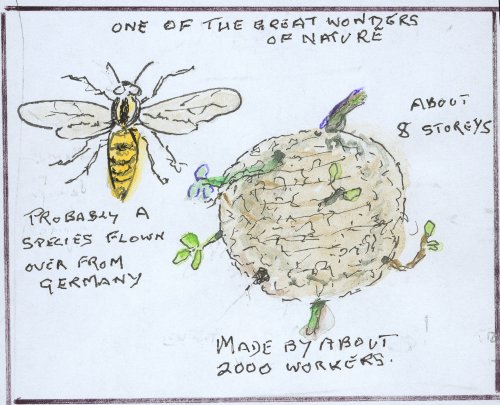
| A complete , foot-ball size ,
wasp's nest has been rescued from a the branches of a bush.
Our native wasps nest below ground so this is probably a
larger species of German wasp that has flown over from the
Continent . We hope it will be exhibited around our village.
Click on images for larger picture |
Winsham's "big cat’, the Maine Coon called IKE, has caught and killed two squirrels that were robbing bird food . He also catches Moles and recently brought a live one indoors and released it under the carpet . It got right beneath the underlay and the loud ripping noise as it was making runs into the room also attracted his lady friend 'Tigger'. They both stood with arched backs watching the rising carpet. Luckily a human ex mole-catcher managed to turn the mole around and guide it to the side where it was caught and released into woodland.  Click
on images for larger picture Click
on images for larger picture |
| October 2003 |
| A
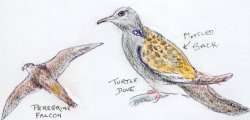
Turtle Dove, feeding with Collared Doves, seen
in Fore St on 30 Sept.These are now a
rare migrant, although a common sight until
the middle of the 20th Century. Its beautiful
purring song was always to be heard
in spring around 'Water mead ' (Purtington
Lane- west) A Peregrine Falcon was
reported flying over Street in early October. |
|
|
| A mystery plant is growing in
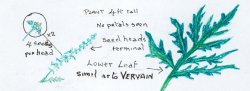
Court St garden. Leaves similar to Vervian but seed heads more
profuse. It may have come from Birdseed and is
under further investigation. Could it be Red Dorian.
|
| November 2003 |
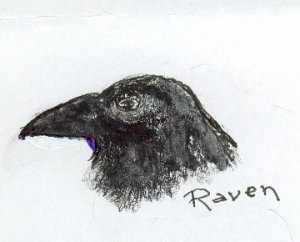
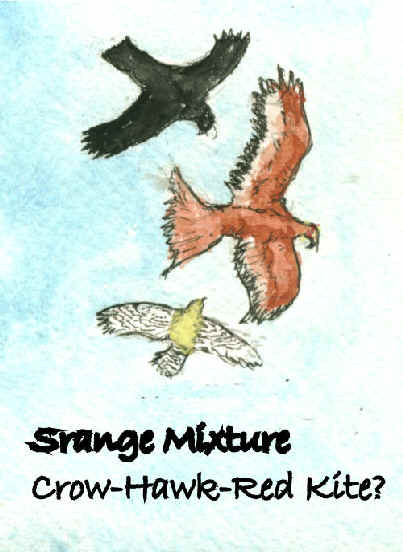
Ravens
|
Wild Flowers
|
| December 2003 |
| Another gentle autumn, with just a few mini night frosts,
one minor flash flood (30th October) and no great gales, gave some
wonderful autumnal leaves. Special vantage points were probably at the
end of Dorman Lane (around Lue Farm exit) and the Watermead area at
Purtington. Roadside wild flowers are now (6th December) very rare,just
a few Millfoil and Hogweed, one Pink Campion in Whatley Lane and one
Dandilion in Western Way, and no real spring flowers. Insect life included a Yellow Underwing Moth, a black Bumble Bee, Greenfly!!,and green caterpillars on garden Brussel Sprouts.  |
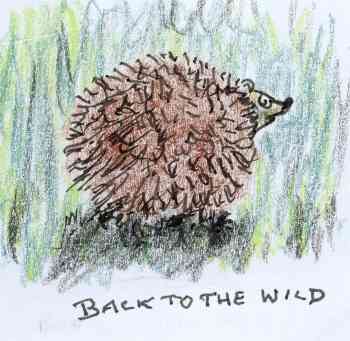
A small Hedgehog-now called Prickles-visited a Davies
Close house or food. It has now been given its own indoor run, a bed
of deep dry leaves and a constant supply of water and best cat food
(and treats), so that it can stay active until being released in the
spring.  |
| January 2004 |
While the end of December, with Christmas and the New
Year,is probably the greatest time for human activity, for Nature, with
the shortest days and cool temperatures,it used to be, the time of its
lowest ebb. Not this year...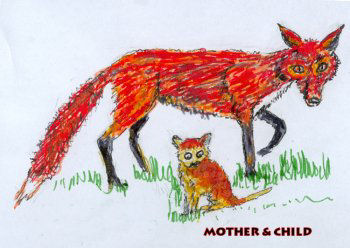 Click
on images for larger picture Click
on images for larger picture
|
The swarm of honeybees that had their Christmas
dinner on a flowering Mahonia bush has been traced to a nearby house
roof.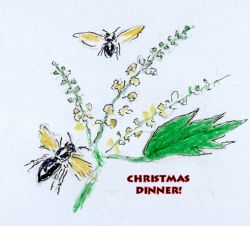 TRICKLES', the rescued baby Hedgehog (featured last month)-has gained over 20 GMs each week and shows no signs of wishing to stop eating and hibernate. An adult fox with 6 baby cubs (probably two litters) was disturbed feeding at a sheep carcass before it could be collected just before Christmas day. A villager with a wildflower bank to her garden collected six different wild flowers on Boxing Day and 2 horse mushrooms were found down Court Street. The 'mixed finch' nock from the Nursery now numbers over sixty birds and recently contained a Brambling. The two family parties of Long-tailed Tits met over the holiday at a bird feeding station and fifteen tailed were counted |
| February 2004 |
| This 'modern' winter consisted
of little more than a five minute snow storm on 28th of January and a
short flash flood on 1st of February. At least our birds think so .
Several have started singing - including a thrush and the robins. The
siskins - on the nuts -that arrived with the colder winds , are now in
full breeding plumage and the cockbirds will even drive off the
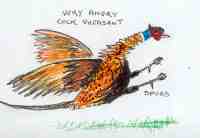
Greenfinches twice their size. The Pheasants have started fighting and
'Charles', the local champion for two years, has already had several
contests. There are five local hen birds . A pair of Goldcrests and a
Treecreeper have been closely observed.
. A Lesser Celandine is in flower in Court Street
Prickles ' the baby Hedgehog rescued when he weighed 550 grams was 975 grams on 1st February and growls when approached. He has not been tamed as he - and his box - will be returned to the wild part of the garden when his mates will have woken up later in the spring. He still eats heartily and will then be over 1 ,000 grams (2.2 Ibs) |
| March 2004 |
| It's a wotsit! Spotted by passer-by in Western Way early one morning in January,2004. About five feet high and looked hungry. Can anybody identify?
|
There are 88 species on
my Winsham Parish bird
list as seen since about 1935. Several species are peculiar to Britain,
having slightly altered since arriving -after the last Ice Age - up from
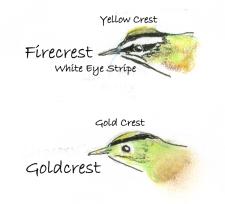
the Continent. The Firecrest
- the Continental version of our Goldcrest
has now been identified in Winsham. Likewise the Yellow Wagtail -with it’s
yellow and not grey back - had been identified.
This brings our list to 90.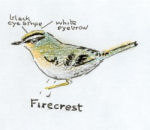 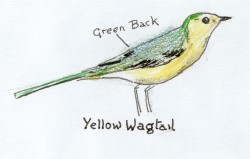 Prickles' - our rescued baby hedgehog - now weighs 2 lbs 5 ozs and is double his original weight. He will be given an RSPB approved hedgehog lodge for his life in the wild when Spring is arrives.'Charles' - the boss Pheasant - has now gathered, at great difficulty, five pale hens for his harem. A black hen has been seen with them one early morning.
|
| May 2004 |
|
The gentle rain showers around the 18th April saw
the trees beginning to burst into leaf. Our 'winter'
was over .
Baby robins were already out of the nest.
The large flock of mixed finches - up to 200 birds - had already
dwindled .
The cockbirds
had donned their breeding colours .
The bramblings
and siskins had gone north and chiffchaffs
and willow warblers were singing from the hedges. Prickles, weighing in at nearly two and a half pounds , decided to break out of his winter pen and is no doubt already searching for a mate and doing battle with other male hedgehogs that stand in his path. He has been back only once for food.
|
| June 2004 |
|
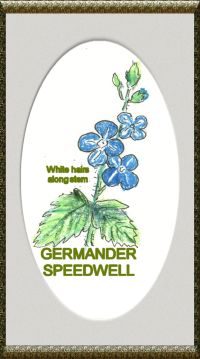
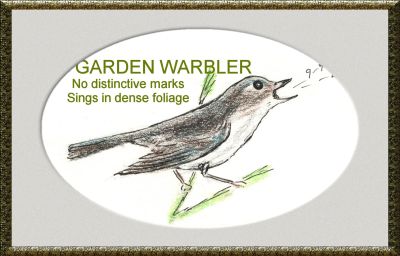
In this vintage year for Wild life Winsham's wild flowers have rarely been better. The Bluebells have been glorious in size with their brilliant blue . Now the Pink Campions, Stichwort and Beaked parley have taken over . The Hawthorn bushes are heavy with dazzling white flowers . Special mention must go to distinctive bright blue patches of the Germander Speedwell that dot the hedge banks along our lanes.The first prize for birdsong this year must go to a Garden Warbler - a truly exceptional songster - that took up station around the Field Maple at the top of Wynyards lane. Next door was a very mediocre Blackcap and a chorus of Blackbirds, Chaffinches, Robins, a Songthrush, Hedge sparrows and a rather persistent Wren. On the lawn below was the occasional explosive crowing of a magnificent Cock pheasant who had won battles with several potential suitors .
|
| July 2004 |
|
Our wildlife watchers this month came up with;-
· Two SLOWWORMS have been seen dead on the roads at either end of the Village. · A HEDGEHOG mum and four babies are in the Davies Close area.
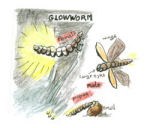
· A few GLOWWORMS usually
appear down Wynyards
Lane each year. This week a female
was picked up in the road and taken –
still lit up - to a local garden in the hope she
will start a colony.
|
| August 2004 |
|
At this time of year Nature has 'exploded'. The plant seeds are ripening. The baby -animals -foxes, badgers, deer …and the rest, at their most numerous. Young birds have lost their baby fluff and are getting their winter colours .The parent birds are moulting into their winter coats and our glorious cock pheasants, in particular, look very sad.
|
Nature Notes for the 20th February,2005
|
Paul Smith died on the 22nd March,2007.It had been apparent to most people that his health was failing, but he remained active until the end, going off on his electric bicycle on expeditions into his beloved countryside when most of us wanted nothing more than to sit by our firesides .
The two notes that follow were the last that he produced for the Parish Web Site
|
|
| A disappointing season, for most of the features of
winter are missing. The Siskins and Bramblings are absent from the
gardens; just a flock of Green finches and Chaffinches in the Nursery
area.. Only small flocks of Redwings and Fieldfares are seen in the
area. Snowdrops, without much competition, grace the hedges and insects
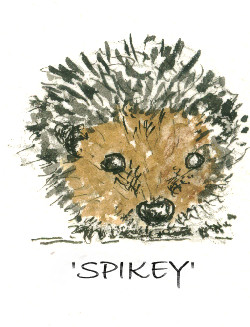
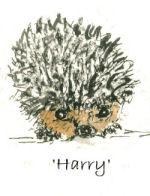
are rare. The only unusual bird reported was a Stonechat ,seen in Western Way. A second baby Hedgehog , called Harry, has now grown to full size, like Spikey , but is bad tempered and growls if handled. They will be returned to the wild when real spring arrives . |
WINSHAM NATURE NOTES-Late December Despite the exceptionally mild spell (52C) only
a |
| Pair of Jays has returned to
a Winsham garden. A Song Thrush was singing at full pitch not
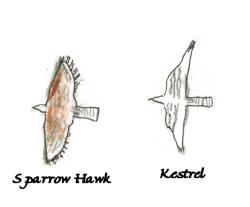
here, but over the Lym river into Lyme Regis. A male Kestrel was seen perching on a roof and being mobbed by two blackbirds and other small birds. We usually see the Sparrow Hawk when every bird disappears. Wild bees have been reported buzzing from a Winsham garden .
|
|
Early December,2006 Recently a rare WRYNECK has been feeding on fat balls in a Winsham garden. Of the woodpecker family it is said to be very distinctive and unmistakable. Unlike the reported 'glimpse ' of a Yellow-browed Warbler seen recently. The Asiatic version of our Willow Warbler it is just one of some forty similar looking Warbler species. The mixed-finch flock from the Nursery area - mostly chaffinches - now numbers over thirty. A flock of twelve Long-tailed-Tits is seen every day. A Goldcrest is reported from the Court Street area. On 25 Nov. a large Grey Heron was seen circling the Village and pitched in an Ash tree overlooking a pond. There is a rescued baby Hedgehog growing well.Despite a couple of short night frosts earlier there are a few reports of late butterflies, dragonflies and the odd bumble-bee. Somerset Wildlife Trust is now promoting synthetic House Martin nests via Ernest Charles catalogue at £14.95. 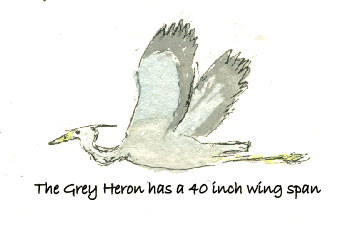 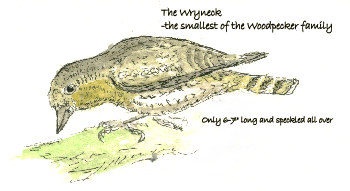 |
| Paul Smith's Nature Notes October 10th 2006 |
| Due to the mildest
season ever witnessed the leaves are still on the trees, which , like
all plant life, are 'dripping with fruit. Gardens are practically
deserted of wild life. Our Blackbirds and even Robins are still in the
woods. Hedgehogs are still around and a litter of baby foxes were seen
and heard playing in late September. Last week dragonflies and
butterflies were about, especially near, waterways ( Rivers Parrett and
Sid), and many Hummingbird moths seen earlier.
Although the milder weather may tend to upset the balance of Nature it is also the length of daylight hours that determines our seasons. |
A very noisy period this year. The
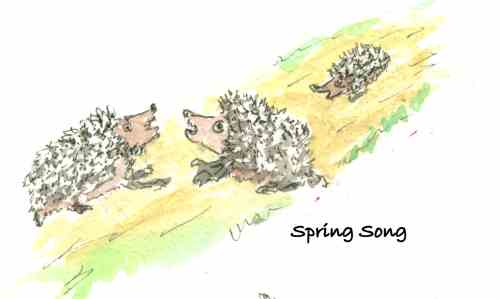
sound of Wild Boar in a Davies Close
garden turned out to be Three hedgehogs trying to perform their courting ritual.
  Click
on images for larger picture Click
on images for larger picture |
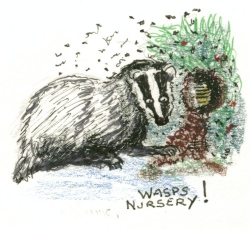
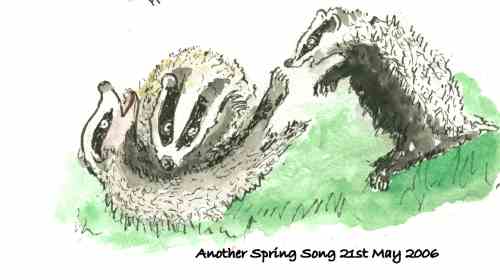
A protracted sound down Court
Street like some ten tom-cats fighting after
midnight only stopped when someone shouted to them to be quiet. That
turned
out to be three large badgers fighting. As they dispersed in various directions
one
was still heard muttering to itself as it joined the footpath at the
base of Broadenham Lane.
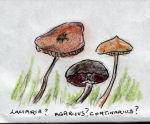
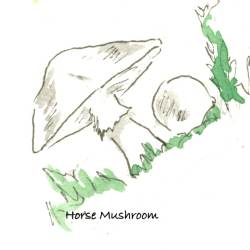
The toadstools growing on 26th
April were thought to be the species St. George
But they were later seen to have a collar and were identified as the species
'Horse Mushroom'. These are normally an Autumn species.
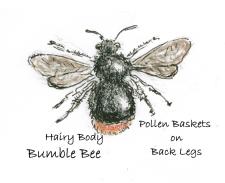
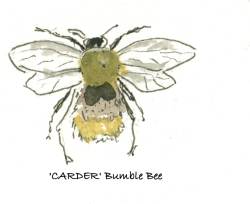
One of the 29 species of Bumble Bee seen this year has been the 'yellow
skirted'variety known as the CARDER Bee . These nest above ground.
 Click
on images for larger picture Click
on images for larger picture |
 Click
on images for larger picture Click
on images for larger picture |
Nature Notes for May 2006
The warm weather towards the end of the first week saw the real arrival of
Spring. The Siskins suddenly left and our Blackbirds went into full song. This
is a poor year for song for most birds are too busy catching up with nesting.It
was the insects that suddenly got busy as the weather warmed up on 5th May.A
swarm of Honey bees first settled on a Churchyard gravestone before settling
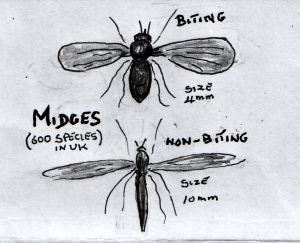
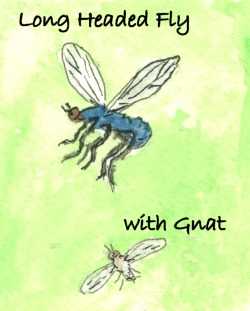
into the tower near the church clock. Two interesting swarms of flies filled the
area between the trees. The first were blue flies with their long legs dangling.
The circled from above the garden plants to up beyond sight over the trees.
Among these was a swarm of tiny white Gnat -like flies, also circling.
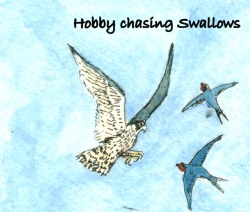
At this time our Swallows and Martins were feeding high over the village UNTIL a
Hobby suddenly appeared and for a time they had to circle the houses.
 |
 |
| WINSHAM NATURE
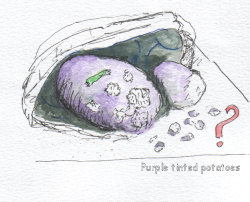
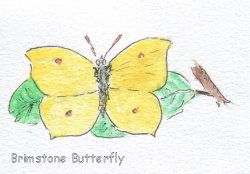
notes for 4th April Spring was about a month late this year. So the early wild flowers - from snowdrops, -wild violets-and primroses to bluebells, dog''s mercury, wood anemone and cowslips will not be swamped with early grass or nettles. The fast mild day was 24th March and since then many of the colourful cock siskins seem to have gone, blackbirds and song thrushes are singing, a brimstone butterfly and a large bumble bee are reported. A tiny dark butterfly, seen in Western Way, was probably a small-copper ( which lives on docks) The rare small-blue is too early . Garden flowers are often profuse. Now for a mystery! A small bag of eating potatoes was left on a Winsham table in a closed room one evening. At some time between about midnight and five am. the bag was torn open and a number of potatoes partly chewed up so that the pieces were apparently not eaten but deposited in and around the bag. As if the creature spat then out in small mouthfuls. A mouse was apparently too small and a rat would have left some droppings. Any ideas? |
|
Nature Notes for mid February 2006
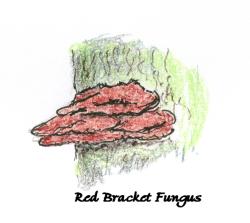
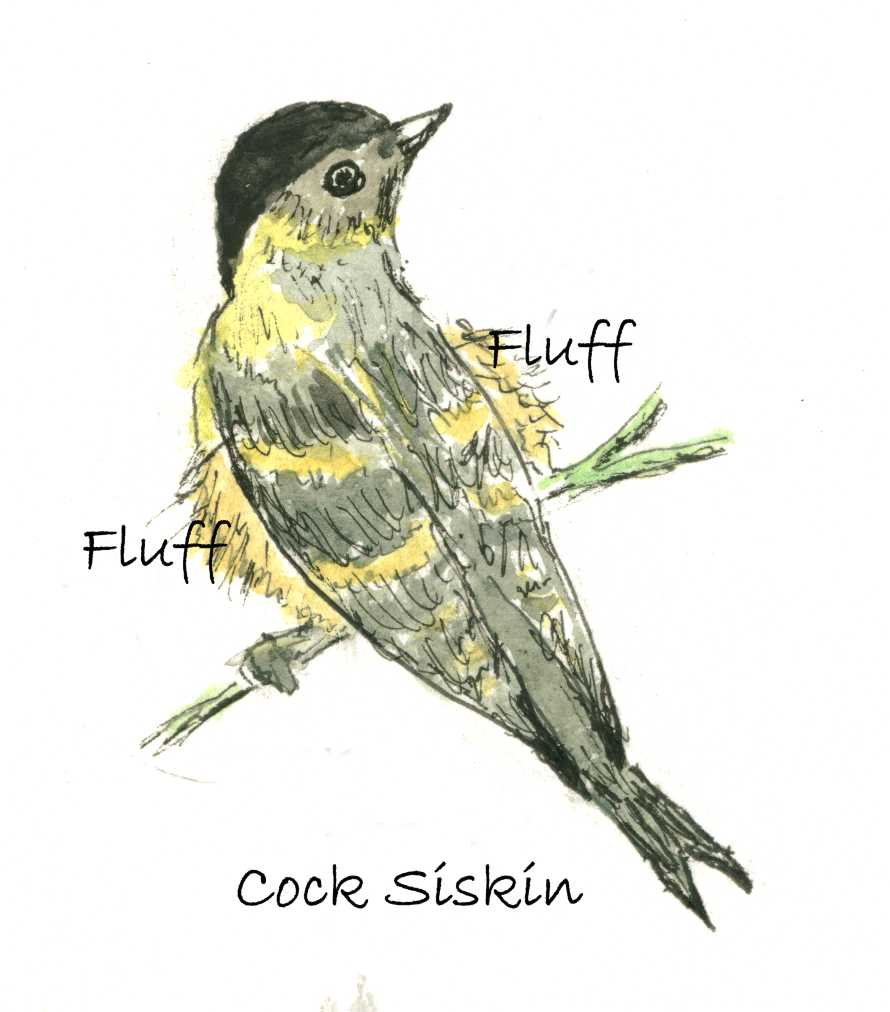
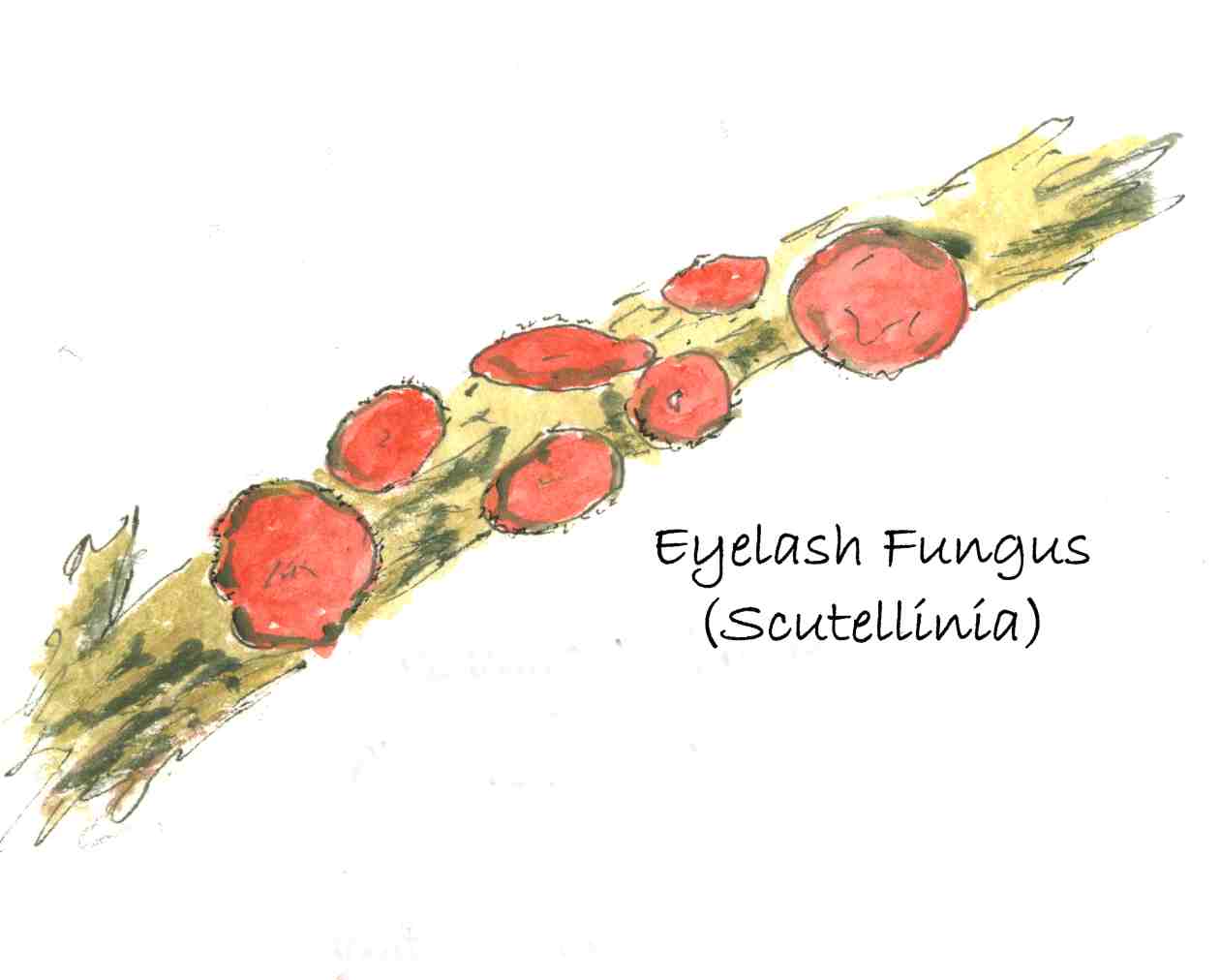
The wind change in February brought us a flock of Siskins and a few Bramblings. Many of the cock Siskins were in breeding colours (bright yellow and black) and readily fought with the Greenfinches on the nuts. One strange specimen is extra large and appears to be carrying baby fluff. There is a Chaffinch, seen for several years, that has yellowish furry legs. The Great Spotted Woodpecker has started his hammering call and a Song Thrush has a few notes of song. Wild Snowdrops are in the hedges (Western Way) and Primroses are appearing.A lovely specimen of the bright red Cup fungus has been handed in. There are many varieties of this species. They grow on fallen dead wood, usually twigs, and bear such English names as Elf Cup or this one, Eyelash Cup. They are inedible.
 |
 |
Nature Notes for end of January 2006
A tour by bike and car around most of
the Parish lanes just after Christmas revealed no wild flowers this year. The
few frosty nights and the slight fall of snow destroyed the single specimens of
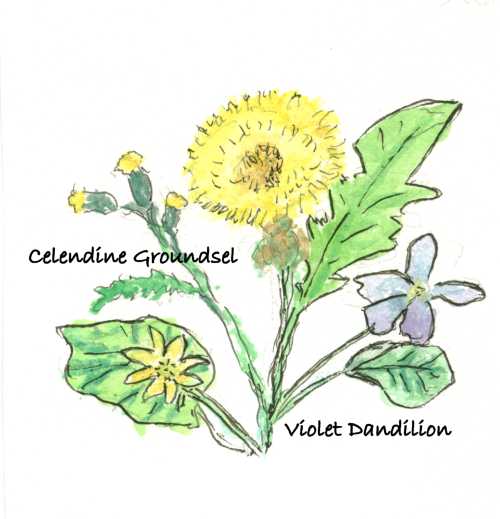
Celandine, Groundsel and Hogweed that had bravely just appeared. Garden birds
have been profuse. Chaffinches, Greenfinches and various Tits (nine Long tails)
, even a Gold crest but only a single Siskin and Brambling so far. A cock
blackbird is already nest building. There is a report of a blackbird with a
white tail feather.
Now (end January) the view has little changed. The garden finch flock numbers
over sixty. A Mistle Thrush sang only a few notes. A few Primroses and Snowdrops
are just reported in flower. Also another Groundsel, some Violets, a Dandelion
and a lone Celandine. There is a National Bird Census this weekend.